

Canyon Echo Farm
Dahlia Tuber Planting Guide
From our fields to your garden
Growing Dahlias at Home
There’s something truly special about growing dahlias—watching a small tuber transform into armfuls of blooms that fill your garden and your home. The good news? Anyone can grow dahlias. With a little sunlight and care, they’ll reward you all season long.
When to Plant
Plant your tubers in spring, after the danger of frost has passed and the soil has begun to warm. If the soil is still cold or soggy, wait a bit—dahlias prefer a cozy start.
Choosing a Spot
Dahlias love the sun. Choose a place that gets at least 6–8 hours of sunlight each day with well-draining soil. The more sun they receive, the more blooms you’ll enjoy.
How to Plant
Dig a hole about 4–6 inches deep
Lay the tuber horizontally, with the eye (or sprout) facing up
Cover gently with soil—no need to water right away unless the soil is very dry
Watering
Wait to water until you see green growth above the soil. After that, water deeply a few times a week, depending on your climate. Dahlias don’t like to sit in soggy soil, but they do appreciate consistent moisture once they’re growing.
Supporting Your Plants
As your dahlias grow taller, they may need staking or support to keep their stems upright—especially the larger bloom varieties.
Encouraging More Blooms
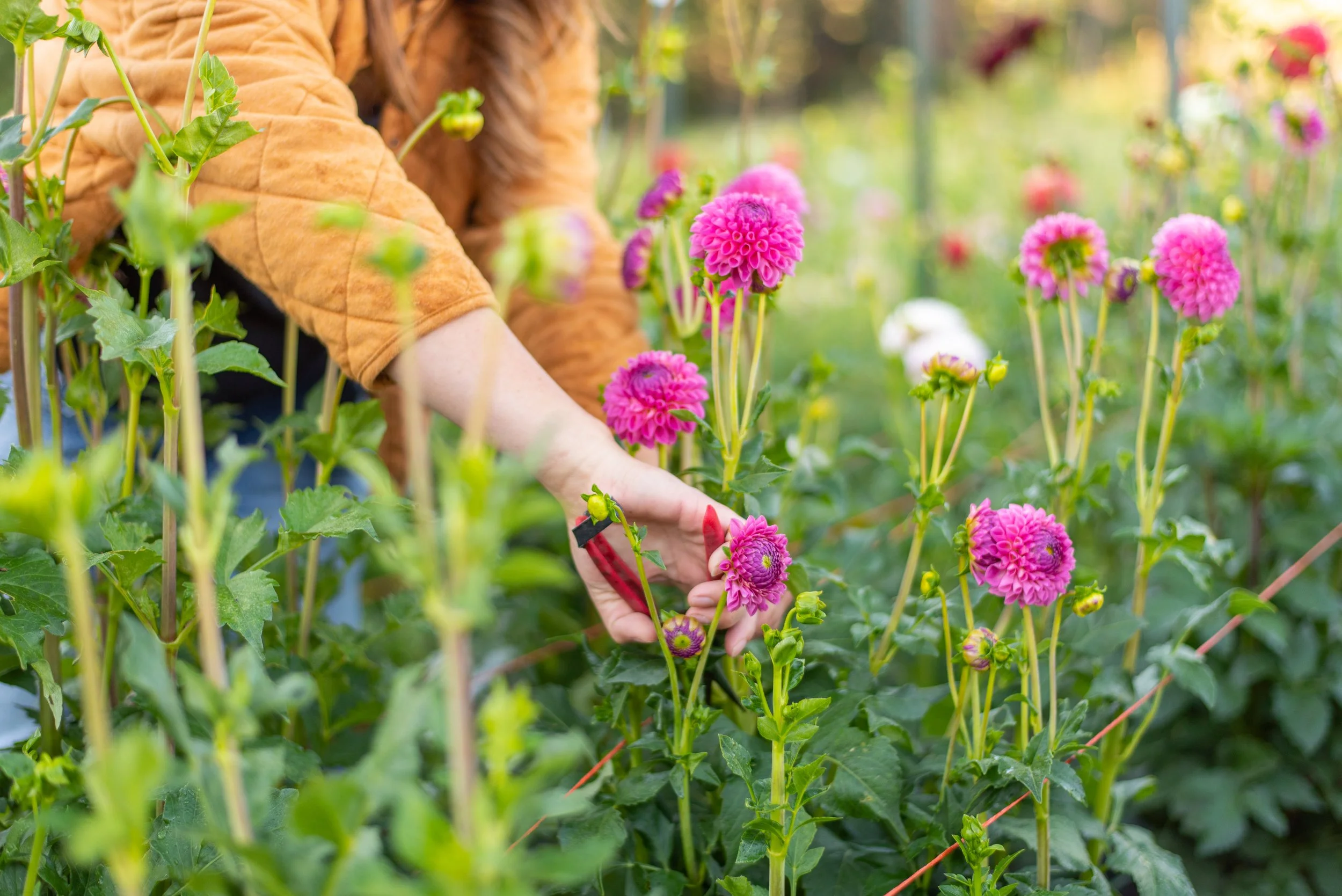
The more you cut, the more they bloom. Harvest your flowers often, or deadhead spent blooms to keep the plant producing all season long.
Pinching the plants early during the growing season can significantly improve your dahlia plants. Once young plants reach about 8–12 inches tall and have at least three to four sets of leaves, pinch out the growing tip just above a leaf node. This encourages the plant to branch out, resulting in a bushier shape, more blooms, and longer, stronger stems—ideal for cutting.
What to Expect
With a little patience, your dahlias will begin blooming in mid to late summer and continue until the first frost. Each plant has its own personality, offering a unique surprise of color and form.
Storage
If you are receiving your dahlia tubers in the mail please make sure you open up your package immediately and move them to a breathable container that is filled with the suggested materials below to prevent them from drying out until it is time to plant. The tubers will not survive if left in the packaging that they are shipped in it is not meant for storage purposes. It is not the farms responsibility to replace any tubers that are not viable before they are planted, or any tubers that are lost due to growers error during the season.
Proper storage of dahlia tubers is essential to keep them healthy and viable for the next growing season. It is dependent on your growing zone how you will approach storing your dahlia tubers. In Utah in most zones we have to dig up and store our dahlia tubers for the winter and replant them again in the spring. If the tubers freeze in the ground they will not return the following year.
After the first frost blackens the foliage, carefully lift the tubers from the ground and gently remove excess soil. Allow them to dry in a well-ventilated area for a few days to prevent rot.
Once dry, trim back the stems to a few inches and inspect the tubers, discarding any that are damaged or diseased. Store only firm, healthy tubers. Place them in breathable containers such as boxes or crates, and surround them with a moisture-balancing material like peat moss, vermiculite, or wood shavings to prevent them from drying out.
Keep tubers in a cool, dark, and frost-free location, ideally between 40–50°F (4–10°C). Avoid areas that are too humid, which can cause rot, or too dry, which can lead to shriveling. Throughout the winter, check tubers periodically and remove any that show signs of mold or decay.
With proper storage, dahlia tubers will remain in excellent condition and be ready to plant when spring arrives.